
Recovery and Rebuilding

Life after treating Lyme

What’s life like after treating Lyme?

January marks month 7 on Laser Lyme protocol.

Where are we now? It’s been an interesting few months, new moons, full moons, Christmas, Halloween, New Years, quite the plethora of reasons to expect hyperactivity, tiredness, and general backsliding. To keep that in check, we still remain true to our NELL protocol, but with the kids back in school, hubs back to work and my commitment to campaigning for legislative changes here in the state, it could easily slip away from us.

That aside, where are we now? Are there regrets over that long summer in the camper in NE? Have we seen any further progress? How are we maintaining?

Well in true and typical fashion nothing is very easy or predictable but we are still sitting around 80 & 85% – we haven’t made any real progress forward in the last few months really but the good news is – we haven’t gone backward. That alone is worth celebrating. We have continued to follow NE Lyme Laser protocol because it is working for us (although we don’t do the exercise and oxygen every day, or the footbath every week, and we have also not been to a chiropractor since we got back), but we do take the drops religiously every day, 3 times a day to keep the Lyme at bay. We have also chosen to work with a nutritionist (Real Food Rebel) to try to address some other areas we know we have challenges in. We completed hair testing and in light of that Brenda at Real Food Rebel has determined a targeted supplement regimen for us. Now we follow a program for healing their digestion challenges. My kids continue to do “ok-ish” on both of these programs combined. The rashes are going or gone, skin is becoming clearer and overall the kids are functioning at home and at school, which is helpful for us all. One little bump in the road is that we are having to remove the amantadine that proved so beneficial in the beginning. If you read back through old posts, after much trial and error (actually 15 different trial and errors) our doctor had prescribed amantadine – just to try and affect some positive change in impulse control. Starting amantadine is what we now refer to as a turning point for our family. Initially, we didn’t see much progress on just 100 mg once a day but once we went to the twice-daily dosing schedule, we started to see big changes. Later a tonsillectomy and adenoidectomy proved equally as beneficial and finally, we got to a point of stability which then enabled a return to school – so life changed drastically from those two interventions for sure. Anyway, around October or November last year an intermittent arm/hand tremor started to became an everyday occurrence and it was decided the time had come to remove this NMDA antagonist/antiviral/ dopamine agonist drug. Tremors can be a side effect of this medication. Never the less, it is bittersweet (it helped so much but no one wants their kiddos on long-term pharmaceuticals) to let it go because we had seen that huge progress using the Amantadine (rationale for use).  It can also be tough to take this particular medication away so we are titrating down very slowly. We know that irritability, depression and suicidal ideation can be an issue with amantadine (both on it and coming off), so we are being cognizant that we might see positives and negatives in those areas before we are completely done.

As a parent, navigating all this information is overwhelming sometimes, I had heard the terms “NMDA antagonist” and “dopamine agonist” before all this started but it wasn’t my go-to in any conversation and I probably couldn’t have used either in a sentence. It was never anything I thought I would need to know, but now these terms and definitions are added to the ever-growing medical vocabulary tucked inside my memory banks. I feel like these definitions must be firmly solidified in my head because, during conversations with medical providers, we need to be semi-knowledgeable enough to agree with treatment plans which sometimes have to happen on the fly.

So what’s next?

MOLD

It turns out that life after (or with) LYME often centers around mold, and this is now the new rabbit hole we have decided to chase down. I am exhausted and would really prefer to snuggle under my duvet and ignore any more LYME, PANS, Mold or infectious disease processes, seriously I really don’t know whether to laugh or cry at the thought of starting a new project all over again. My house has been tested 3 times in the past year, and we have high levels of Aspergillus penicillioides amongst other fun stuff. We only found this out after much convincing to test from friends who all agreed more had to be going on. I really didn’t believe there was mold in my house because A: We have no active leaks and B: We had completely renovated the house 5 years ago when we moved in. I was positive there was no mold, but to stop the questions, I ordered an ERMI test from Mycometrics . No one was more shocked when the results came back really high and Aspergillus was the worst.

We set to cleaning every room with a combination of water and Everclear, we also threw away hundreds and hundreds of items that might have been contaminated by mold. We painted rooms with low VOC, mold resistant paint, and we even purchased an HI TECH machine along with 2 very large unattractive Dri Eaz air scrubbers, but the mold still remains somewhere in this house. Sure, our ERMI scores have gone down significantly but not yet low enough to be considered “acceptable” to live in for someone with a Chronic Inflammatory Response Syndrome (CIRS), which we seemingly have. So – as exhausting as it is – we plan on using a different company (Conflict Free Mold), to take new samples. This will mean I can afford to do every room individually. Prior testing was one sample from multiple rooms combined on the same cloth, we did it this way simply due to cost. Unfortunately, this means that while I know I have mold and what type, I have no idea at all where the mold is concentrated or where it has spread in the house. So, pith helmet on, flashlight in hand, crawlspace here we come… not really, I will purchase a kit, and send off 10 samples (one from each room) and see if we can finally pinpoint where our problem area or areas are.

This journey was never going to come down to just one thing I suppose. It’s been caused by many things stacking against us for a long time. Lyme may be one of our triggers but the post-infectious autoimmune encephalopathy we are struggling with now, is the end result of many, many, many things, or at least it is for our family. This may help explain further – Moleculara.  The longer this goes on, the more we find out, the harder we must work to resolve it. We want what everyone else wants – our kids to be as healthy and happy as possible in this life. Mold is toxic, gene SNPS create issues, bacteria, viruses, unhealthy diets, allergens and environmental toxins aggravate an already stressed immune system but we still want the best for them. So, for now, all we can say is:

“Mold!! – Challenge accepted.”
 

How Many Times…

How many times …

I had reason tonight to go back over a series of blog posts about a program we had completed in 2011. As I was reading through the Brain Balance blog roll I realized we had actually finished that program with hope in our heart and a skip in our step. Okay perhaps we were not quite that enamored but certainly, we felt like we were in a really good place. When I wrote any of those earlier blog posts, I had no idea that those brief periods of respite (that we celebrated so much) would last a few months and then cycle right back around again. In reality, by the end of 2013, we had cycled into a far worse place than we had ever been before. If you have read this blog from the beginning you will know that that was quite an achievement.

By September 2013, a truly awful milestone had been reached. So even though we had enjoyed slightly better behavior, slightly less stress, slightly calmer days and nights, and definitely more cognitive ability during those 12-18 months after the BB program, it didn’t last, because in our world recovery has never lasted.

Why even write the blog? I don’t make money doing this. I lose sleep because I only find time to do this late, late, late at night. I don’t have a million subscribers or even a YouTube channel. I often ask myself what’s the point, why do I keep writing this? Living in the chaos that stretched into years, I knew I would forget the nuances, the little things, the truly chaotic nature of what was going on and when? Although it probably would be better for us all if I had just forgotten a lot of what happened and moved on. Initially, I truly hoped someone would read what I was writing and say “I wanted to contact you and let you know, I know what this is, I know how to help you” but as desperate as we were that sadly never happened. We spent years hoping for the cavalry and by the time I started writing this blog we were really heartbroken and lost about what was going on with our beautiful, cute, adorable son. It was only many years later it eventually occurred to us WE ARE THE CAVALRY. We have spent years on this hamster wheel, praying to get off never really knowing how but we never stopped trying. I, like millions of other parents, refused to give up. When we went from one doctor to another, from one mediocre treatment to another, we never gave up.

When I first learned that we had a spectrum disorder at 18 months, I thought to myself “well, we are not doing this, he’s going to be fine” and being who I am, I got on with the business of healing my child. I really thought, for sure by the time he was 3 we would have this thing resolved. I wasn’t worried. I had it in hand and was egotistical enough to believe that by the time he was eligible for early intervention, we wouldn’t even need it. Later, when the Easter Seals combed over paperwork the Arizona Early Intervention program had sent when we moved, I assured our caseworker that we would be done before his 3rd birthday and a place in the local school district was unnecessary. Just help us get settled I had said and we will take it from there. Yet when he started developmental pre-K on his 3rd birthday, screaming relentlessly as I left him at the school, I allowed them to placate me as they reassured he would be fine and I thought, “Okay, I am a little disappointed we didn’t get to where we needed to be already but by kindergarten, we WILL be sorted.” It turned out that kindergarten actually went pretty great. We figured we were making progress, we congratulated ourselves because what we were doing was working. A little later, when we again began having challenges, I really still had great hope. As part of that hope, we switched to a private school for 2nd grade, I thought, “HA! I had missed a part of our puzzle, I believed I had figured it out. It was the school that was the problem. I naively thought, “the new school will make it better for us all” and for a while it did. Around this same time, we had completed Brain Balance and then chose to re-enroll in another round of OT about 6 months later. It was actually going well in the small Christian school he was enrolled in.  However, we all know how this story goes and by the end of 3rd grade, we found ourselves right back to square one. It was a perfect storm of both a challenging teacher and what we now know was a defunct immune system.  These autoimmune triggers can wax and wane depending on environmental situations, bacterial exposures, viral loads and even just from the etiology of the disorder, we didn’t know this at the time. Those behaviors were actually a symptom, not a side effect of what was going on. Those behaviors controlled all of us because we never truly knew what we were really dealing with. Even though many, many, many times we allowed ourselves to believe we were on the winning side of all that was going on.

Anyway, nostalgia night, that’s really all this post is about. I have been reading back through my blog and I see how many times we truly believed we had cracked the code. Even now – as well as we are doing – I know to err on the side of caution. I know from past experience this recovery could just be a fake out, this could all be smoke and mirrors. What we have going on may just have hit a down cycle and that alone might be the reason for our calmer normality. Next week, next month, even next year we might very well be right back where we started, but until then we choose to believe the cavalry finally arrived. Ever the optimist, I am choosing to believe that this time, this is THE time we finally have it figured out.

Lyme Laser – Day 86

 Lyme Laser Treatment – Day 86

Maintaining at home

Ideally, we would have only just been returning home from NE. This is a 12-week program but as previously mentioned, we were forced to return home a full 1.5 weeks earlier than we should have. Initially, we figured missing those couple of weeks wasn’t a big deal but it has definitely interrupted the flow of diet and supplement schedules. So yes, now I am wishing we stayed for the duration but as that wasn’t possible, here we are.

A few things have happened since we got home, one kiddo is still battling chronic nausea that began around week 8 while in NE, the other still has an infection on the forehead that was there when we arrived. Both kids have returned to school and that’s where we knew we would either confirm true progress or we would crash and burn. So for ease, I will break this down into two parts: Physical and then social – because realistically we struggle with both but they are separate challenges for us.

Physically both are doing pretty great (not perfect, but pretty great). Joint pain is mostly gone, for sure neither kid has woken up with “growing pains” since we returned, no more random weird muscle pain in their upper arms and no more strange shooting pains up their legs or in their toes, and of course, the foot pain I have mentioned before – still has not returned.

Headaches: These really only affected one kid but they too seemingly are gone. We are still struggling with braces (orthodontics) pain in teeth and gums but the TMJ-type pain along with the headaches thankfully no longer seems to be an issue.

Nausea: As I mentioned, one is still struggling a lot with nausea first thing in the morning, sometimes it’s really bad but regardless it tends to pass about an hour after the alarm goes off. Truthfully it is a little disturbing and we have been addressing it with our PCP since returning home (adding in small carbohydrate bursts, little piece of fruit, no water on an empty stomach, adjusting supplement schedules, small snacks before bed, different probiotics, activated charcoal, famotidine, etc) but it remains the same and I am now leery that it has something to do with the braces situation. Have to research that some more.

Stamina: This is an ongoing issue, PACER testing at school keeps triggering asthma attacks. However, the change here is that there is a desire to be fitter, which is a massive change in attitude. Realistically it will take time to get into a routine that involves physical exercise over computer gaming but we have the desire, so that’s a step in the right direction. We did order an oscillator so we can add that to our routine at home.

Skin eruptions: Both have ongoing weird skin issues. One has an almost fungal looking patch on the head, which is being addressed by a dermatologist and the other has dark patches on the forearm that honestly I just thought was dirt when it showed up initially. The patches are not raised or painful but the skin has a dirty gray discoloration to it. It is more visible later in the day and encompasses a large-ish part of the forearm, we had seen something similar early on in treatment on the neck area but that section is completely gone now. I am just assuming that this is due to some weird detox reaction.

Bartonella Rash: Seems to have stayed status quo now for the duration, it is definitely less than when we started but at some point stopped fading and is still visible especially for one kiddo.

Social: School is going superbly well. Both were happy to get back to their friends. Luckily the last two years have been favorable for that. Friends were scarce in the beginning, especially for B because the behavior was so erratic and extreme, but last year that began to turn around. They both now have a couple of really good friends and having a group to hang with at school, always helps the day go better. They both also report that their memory is improving which makes classroom work much easier. Even as late as May this year, B could only follow the first one or two sentences his teacher would say, after that his auditory processing became an issue in addition to the memory challenges and he was lost pretty fast in every class he went into. Both seem to be having an easier time understanding what is being said by the teacher without having to follow up or get extra notes afterward, this is an exciting piece of our puzzle. Processing instructions given verbally for assignments and/or tasks have been a significant problem in the past and caused many upsetting returns home from school. This seems to be resolving little by little as we continue on. I am also ecstatic to report that behavior in school has been great and we are managing to get to school on time which is huge. We had many, many tardies last year and one of our big goals this year was just to get to school on time. Now that sleep is becoming a regular thing, getting up on time is of course much easier and thinking about it logically, this probably helps the memory challenges just as much as working to reduce inflammation and killing Lyme has done. Chicken or the egg…

Homework is still not being completed by B (I just keep saying “breathe, lady, breathe – Rome was not built in a day…”) this is a big struggle because mentioning anything remotely homework related can cause a meltdown of epic proportions. This is where we see the most sparks of prior behaviors. Conversely, A has consistently been an attentive student even in the worst of times, A would cry and struggle and try super hard to keep up even during our homeschool periods. Homework has always been important and completed on time so again status quo reported here, nothing has changed for either of them in this regard.

Diet – Both are now allowed a wide variety of fruits and veggies and even 1 or 2 carbon sugars (honey, maple syrup). Both are taking lunch every day and B is pretty rigid about sticking to the diet, he apparently likes feeling so much better although the “anorexia” part of his OCD has always been a little discouraging. Anyway, he really is eating, eating well and eating in front of us so we know it is not an issue, we tell ourselves his pride in how his body has changed is kinda normal but still, this is a little anxiety driving for us. We have struggled with body image, choking feelings and food refusal several times for both of them and we don’t want that to become a recurring issue. However, they have finally started to grasp the “calorie matching” principle we were told to stick to and so we are just going to proceed with caution on this part of the program. Truthfully, A is struggling a little harder in this area. The desire to eat pancakes instead of protein in the morning is overwhelming and probably relatable to the nausea feeling. We did find a respectable almond flour pancake mix which is also Paleo, no sugar or soy and relatively high in protein. That seems to be a decent starter for the day and is working out well so far. We also found KNOW Foods, which is a huge bonus for the times when I am just too exhausted to cook and be creative or they are craving something cakey.

When we started on this journey a thousand years ago, we didn’t initially know when or how we would get our child (and later our children) back, we didn’t even know what was wrong or where to focus, but we knew we had to bring our kiddo(s) back someway, somehow. When the other one got sick, the panic became even more real. How does one envision supporting two adult children (who are struggling to function) long term, especially at our ages (less than 10 years to retirement) – it becomes very scary to think more than a few days ahead believe me and our conversations became more frantic as the years went by without real healing or relief. Yesterday, was our quarterly psychiatry follow-up appointment. This physician has been on the journey with us for over 4 years now. When we first started meeting with him, we all agreed, B struggled with memory, self-esteem, depression, struggled to stay on topic or focus on general conversations. Most conversations would jump randomly from topic to topic in no particular order. Everyone we had sought out told us B was very complicated and/or complex and many didn’t even know where to begin to try to help us resolve these challenges. Our psychiatrist has been an active participant of our long term support system, despite the fact that we either failed (and sometimes refused) many pharmaceutical or natural supplements, he has never given up making suggestions, talking us through and brainstorming different options. Yesterday, he was so happy to report to me at the end of the session that B’s mood is reportedly “great.” Yes, the kiddo who was been depressed for over 5 years is now reporting feeling “happy” and “ok about stuff.” He is coping well and actually using the strategies learned from years and years of CBT with both the psychiatrist and therapist. These people have been instrumental in helping him reframe the negative thoughts he has always had. However, prior to treating Lyme, rational thought processes or calming techniques were just not accessible to a child, in that moment, who had a brain on the boil.

So on that note, technically we are done, although of course we really aren’t, we are just done the core part of the program.

We will now stay on maintenance for however long it takes to get to 100%. As of today, nothing much changes until next week, then we take a few days break from one of our key supplements – not gonna lie, little terrified about that one but Dr. Wine has assured us it is a very valid next step in the program. So until the next update, wish us continued success and we will see where this takes us… If you are interested in learning from the clinic, contact them at Lyme Laser Centers of New England. However, I will say this, after many years of jumping down one rabbit hole to another (thanks mainly to information like this found on the internet at 2 am), I would caution you to do your own due diligence. Are we 100% well? No. We are only probably around 70-80% better than we were 6 months ago. Both kids still struggle emotionally, both still meltdown and rage randomly but certainly not the chaos it was before. Was this magic? No. There is no magic pill, not one that I have discovered anyway. Was this hard to pull off? Yes. We had to live away from home for nearly 3 months and commit to a program we had no idea would work. Is the diet part tough to maintain? Yes but as time goes on it becomes easier and easier. Does diet even help Lyme? I don’t know, I am not a doctor, it certainly helps us. Gut brain connections are being studied more and more, and so we felt it was an important part of any program, other people don’t. You have to choose. This has helped us get to probably about 80% healthy, this has helped us reduce rages (not eliminate, just reduce) and improve memory, this has helped them both feel mentally and physically better but conversely, there are a thousand different other things we tried that were amazing for others but didn’t help us at all, or it only helped a bit, or the gains didn’t stick, or the cost was prohibitive. So again I would caution you to do your own due diligence. I try really hard to not get caught up in the moment and I try to be realistic about where we are. I would never assume this is it for us, this is all we need because the reality is so many times recovery has been tenuous and treatments that have started successfully, ended up fizzling out. I would never suggest anyone do what we did because again, we are not where we need to be yet and even if we were, this may not be the answer for you anyway. We still also take additional supplements to those that were suggested a LLCNE. You have to read as much as you can (PubMed is a wealth of information), you have to talk to people, and only you can decide what’s next for you. But I can say, this is what’s working for us, right now, today and if I had to do it over again, I would. In fact, I am plotting and scheming how I can get myself through the program because the relief they got, I want for me too. 😀

Happy labor day everyone.

You can reach me at dancingbonfires@gmail.com if you have specific questions otherwise, until next week.

Returning home from Lyme Laser Treatment Centers of New England

Returning home from Lyme Laser Treatment Centers of New England

Day 75

We have been home now for 5 days and I can honestly say the adjustment was slightly chaotic. We haven’t really unpacked yet but supplements still must be given on time, as per our previous schedule. It definitely has taken more than a couple of days to get back to a routine, now it’s Saturday and we finally executed our schedule perfectly. I have managed to source some of the pieces of the program that we would like to continue at home, so while we are technically finished at the clinic, we will maintain the supplements, footbaths, exercise and diet schedule for many months going forward. We, of course, brought a large bag of supplements back home with us, but they have been reduced now we are in maintenance mode.

Overall, the progress continues. Both kids are adamant they are happy they did the program, annoyed at missing summer with their friends but feeling about 70% better than they did when we left.  I am a little nervous because if we were in MA still, we would not be in maintenance for another week or two. I am praying it doesn’t set us back because we left early. Dr. Wine is confident in our recovery from here as long as we maintain the program, but I have had so many false starts during our journey, I am always just really nervous about going backward.

So week 11, now behind us, heading into week 12. Really nothing drastic to report, just more of that steady climb upwards to feeling healthier. If you ask my kids, “do you think it was worth it?” they now reply with a resounding “YES!!” which makes it so worth the sacrifices we all made to get there. They are definitely feeling better each and every day. One still has frustration and is still experiencing some obtrusive/obsessive thoughts, the other is feeling nauseous on and off, which has been an ongoing issue. We think it is related to candida and food intake. We will hope that as that resolves (Dr. Wine’s protocol addresses that), nausea starts to remit as well.

Anyway, first two days back to school went phenomenally well for both. The one with memory issues was happily surprised to find that everything stuck during the first days of classes, this was one of our greatest hopes going up for treatment. The memory issue in conjunction with poor processing has been a great source of frustration, so having both issues improve is very exciting.

So all in all, a really great week. Again, both feeling better each day, maintaining gains and happy to be back in a routine. For sure, both are ready to have some fun at the amusement park tomorrow, it will be interesting to see how they enjoy that with all their extra energy and motivation. Roll on week 12…

Interrupting regular programming…

TEN THINGS A NEWLY DIAGNOSED

PANS/PANDAS PARENT NEEDS TO KNOW

Interrupting regular programming to talk about chronic Lyme and PANS/PANDAS and Neuroimmune Diagnoses

My children and I are in NE treating Lyme, this is true, but the chronic condition my children are diagnosed with is actually PANS (Pediatric Acute-Onset Neuropsychiatric Syndrome, OR as it has morphed across the internet from the original moniker – Pediatric Autoimmune Neuropsychiatric Syndrome). This basically means my kids both have neurological and physical challenges associated with their illnesses.

I created this document for the parents who find their way to our Facebook Group. Our, meaning an organization I am currently working on. PAE KIDS SC is a parent-led grassroots organization focused on educating the community on better recognition of PANS. We are reaching out and speaking with doctors, schools, and therapists in South Carolina as well as asking for an advisory council in this state. I also thought this might help anyone who finds my blog get up to speed on the acronyms and message board topics should they wish to explore the topic further.  (Someone recently told me this was overwhelming. I agree, it probably is. Bookmark this page, print it off, make notes, rest assured you will come back to this information (not just here but across the web) time and time again and eventually you will be adding things to this list. As a new parent thrown into this – it is shock and awe, but you will quickly grasp your bearings, begin researching and before the clock strikes midnight, you will realize you have searched Pubmed backward and forward and are arguing treatment protocols like a pro! Read this once, keep it, pass it along, read it again, and when you know more, come back and update us, please. Crowdsourcing works for all kinds of things now, why not healing our children?)

TEN THINGS A NEWLY DIAGNOSED PANS PARENT MIGHT NEED TO KNOW

Understand the diagnosis and acronyms: PANS stands for pediatric acute-onset neuropsychiatric syndrome, this acronym is also sometimes expanded to pediatric autoimmune neuropsychiatric syndrome. PANDAS (Pediatric Autoimmune Neuropsychiatric Disorders Associated with Streptococcal Infections) is a subset of PANS. There is also another (older) acronym – PITANDS, which stands for Pediatric Infection-Triggered Autoimmune Neuropsychiatric Disorders. “The NIMH Investigators discovered that the OCD, tics, and other symptoms usually occurred in the aftermath of a strong stimulant to the immune system, such as a viral infection or bacterial infection. The first cases were given the name PITANDS for Pediatric Infection-Triggered Autoimmune Neuropsychiatric Disorders. The first reported cases of PITANDS followed infections with influenza, varicella (chickenpox), and streptococcal bacteria (strep throat and scarlet fever). (See Reference #3 for descriptions of the PITANDS cases.) Later cases were reported to occur in association with Lyme disease and mycoplasma infections (“walking pneumonia”). The NIH investigators chose to focus on OCD symptoms that occurred after streptococcal infections (the PANDAS subgroup) because of a connection between OCD and Sydenham chorea, the neurological form of rheumatic fever.” click the link to understand read in its entirety.

Who is Susan Swedo, MD? “Susan Swedo is a researcher in the field of pediatrics and neuropsychiatry, and since 1998 has been Chief of the Pediatrics & Developmental Neuroscience Branch at the US National Institute of Mental Health.” Wikipedia. Swedo wrote the first paper on PANDAS.in 1998. “In the early 1990’s, investigators at the National Institute of Mental Health (Drs. Susan Swedo, Henrietta Leonard, and Judith Rapoport) were doing studies of childhood-onset OCD and observed that some of the children had an unusually abrupt onset of symptoms. Unlike typical cases of OCD, where symptoms begin gradually and may be hidden by the child for several weeks or months (because of their embarrassment over the irrational nature of the worries and behaviors), the children in the PANDAS subgroup reported a very sudden, dramatic symptom onset. The obsessive thoughts, compulsive behaviors, and motor or vocal tics appeared “overnight and out of the blue” and usually reached full-scale intensity within 24-48 hours.” NIMH

Going to the doctor: How do I know he won’t laugh out loud when I suggest PANDAS? Sadly, they probably will at least look at you sideways but always, your first stop is likely to be your pediatrician. This should always be where you go first anyway, however, it is probably better if you do not immediately suggest PANDAS; PANDAS is a subset of PANS and is strictly tied to a strep infection. If you ask about PANDAS, your doctor will possibly culture your child’s throat, see a negative rapid strep wand and move on. However, Strep can exist in multiple areas both in and on the body, it hides and is elusive; potentially, unless your child has a raging fever, a really sore throat with sore joints and body aches, your doctor will likely dismiss your thoughts of PANDAS. Sadly most physicians have now been taught that this is a rare disorder; however, it is estimated conservatively to affect more than 1/200 children. Parental complaints of misdiagnosis fill the internet rather than stories of their concerns being taken seriously. So we suggest (BEFORE going to your doctor’s office) that you print off a copy of the Diagnostic flowchart from PANDAS PPN and the guidelines for diagnosing PANS/PANDAS to take with you to the appointment. Be aware to firmly state to your doctor that anecdotally it is thought that a large percentage of parents who found themselves in this world did NOT experience a sudden onset with their children. Most had noticed odd behavior prior to the sudden onset of crippling OCD or TICS that their children experienced. It is also worth noting what OCD really entails because it is often not at all like they portray in the movies.

The diagnostic guidelines link above will allow you to read more on the many hidden OCD manifestations that you may have missed prior to realizing this debilitating condition. Please also arm yourself with this information: Pace Foundation Guidelines

Question: If my pediatrician sends me away, how else do I get a diagnosis of PANS or PANDAS? Firstly leave the linked information above with your pediatrician. They may not have had time to read the latest research and standards of care for PANS patients, they should have but they genuinely may not have had time and it is worth discussing these flowcharts and standards of care with them. However if your pediatrician refuses to accept a possible PANS option or the care is limited at your family practice, you will be forced to move on. Technically these disorders are a clinical diagnosis but most doctors may want to run some (not all – perhaps request * first) of the following labs for infectious and vector-borne triggers.

a. ANTI-STREPTOLYSIN O Titers * (a measure of the blood plasma levels of antistreptolysin O antibodies used in tests for the diagnosis of a streptococcal infection or indicate a past exposure to streptococci.)
b. ANTI-DNASE B Titers * (blood test to look for antibodies to a substance produced by Group A Streptococcus. This is the bacteria that causes strep throat. When used together with the ASLO titer test, more than 90% of past streptococcal infections can be correctly identified.)
c. Streptozyme * (screening test for antibodies to the streptococcal antigens NADase, DNase, streptokinase, streptolysin O, and hyaluronidase. This test is most useful in evaluating suspected poststreptococcal disease following Streptococcus pyogenes infection, such as rheumatic fever.)
d. Mycoplasma pneumoniae IgG and IgM * (Two types of antibodies produced in response to an M. pneumoniae infection may be measured in the blood, IgM and IgG. IgM antibodies are the first to be produced by the body in response to infection. Levels of IgM rise for a short time period and then decline, often remaining detectable in the blood for several months. IgG antibody production follows IgM production, rising over time, and then stabilizing. Once a person has had a mycoplasma infection, they will typically have some measurable amount of mycoplasma IgG antibody in their blood for the rest of their life. In order to diagnose an active M. pneumoniae infection, a health practitioner may order both M. pneumoniae IgM and IgG antibody tests as acute samples and then collect another M. pneumoniae IgG test two to four weeks later as a convalescent sample. This combination of tests is ordered so that the change in the amount of IgG can be evaluated and because some people, especially infants and those with compromised immune systems, may not produce expected amounts of IgG or IgM) LabTestOnline
e. Lyme Western Blot and consider an IGeneX or Galaxy Lab test for coinfections of Lyme. Lyme disease is caused by a number of different strains and species of Borrelia bacteria, generally, Borrelia burgdorferi in the United States., while these two tests are typically more expensive than the standard Western Blot there is often more diagnostic success from these tests especially for – Babesia, Bartonella, Ehrlichia/Anaplasma.
f. IgG, IgA and IgM levels. *
g. IgG Subclasses, IgG1, IgG2, IgG3, IgG4
h. Ferritin * (iron levels: These tests can show how much iron has been used from your body’s stored iron. Tests to measure iron levels include: i. Serum iron – This test measures the amount of iron in your blood. The level of iron in your blood may be normal even if the total amount of iron in your body is low. For this reason, other iron tests also are done. ii: Serum ferritin – Ferritin is a protein that helps store iron in your body. A measure of this protein helps your doctor find out how much of your body’s stored iron has been used. iii: Transferrin level, or total iron-binding capacity. Transferrin is a protein that carries iron in your blood. Total iron-binding capacity measures how much of the transferrin in your blood isn’t carrying iron. If you have iron-deficiency anemia, you’ll have a high level of transferrin that has no iron.
i. Ceruloplasmin (Ceruloplasmin (or caeruloplasmin) is a ferroxidase enzyme that in humans is encoded by the CP gene.Ceruloplasmin is the major copper-carrying protein in the blood, and in addition plays a role in iron metabolism.)
j. Serum copper (Low serum copper, most often due to excess iron or zinc ingestion and infrequently due to dietary copper deficit, results in severe derangement in growth)
k. Vitamin D * (25-OH)
l. Pneumococcal antibody panel * (13, 14 or 23 serotypes)
m. CBC with differential and platelets *
n. Free T3, Free T4, TSH *
o. ANA with reflex *
p. Hemoglobin A1c
q. Coxsackie A titers/ Coxsackie B titers
r. EBV (Epstein Barr) Panel
s. HHV-6 titers
t. Parvovirus B-19 titers
u. B12, folate
v. SMA-20
w. Anti-thyroid antibodies *
x. Plasma amino acids because the symptoms of PANS/PANDAS/PITANDS are very similar, it is the trigger that differentiates the disorders. PANDAS is specifically triggered by strep, PITANDS by Infection, and PANS -: “The National Institute of Mental Health (NIMH) acknowledged that PANS, a treatable autoimmune condition, could be triggered by any number of infections (other than strep) and that patients could be diagnosed with the condition even if the infectious trigger(s) was unknown. In 2012, the NIMH released diagnostic guidelines for PANS. There is a growing number of publications on PANS, with the Journal of Child and Adolescent Psychopharmacology (JCAP) publishing a special edition on the syndrome in February 2015.” Moleculera Labs P.A.N.S. Most doctors currently use the PANS/PANDAS acronyms, but doctors are also beginning to refer to this as autoimmune encephalopathy/encephalitis (Encephalitis is often caused by an infection (bacterial, viral, parasitic) but can be due to autoimmune diseases. Encephalopathy is an altered mental status without a fever that can be due to many different causes including drug effects, lack of oxygen and toxins).

How to find a reputable doctor to treat my child? Join a Facebook Group. Other parents are often your best source of information but try to remember what worked for one probably worked for that one… all our children are different and all present differently. Allow a doctor the courtesy of diagnosing your child correctly (low iron, thyroid issues, and many other disorders can cause similar symptoms). NMDA Autoimmune Encephalitis can be life threatening which is a really good reason to fight for a correct diagnosis. Many parents manage symptoms at home by using homeopathy, essential oils, along with pharmaceuticals, herbal protocols, and supplements to name a few. The message boards are awash with information, choose wisely and use those message boards to locate a doctor that most aligns with your preferred method of treatment (MAPS/homeopathic/integrative., etc). Most of the groups are closed and the admins will want to know if you suspect your child is heading to a PANS/PANDAS diagnosis before they accept you.

Some available groups (all can be searched from Facebook):
Homeopathy & Alternative Pandas Parents
PANDAS/PANS Institute (run by Rosario Trifiletti MD, PhD, LLC a leading expert in treating PANS/PANDAS and neuroimmune disorders in pediatric patients).
Parents of Children with PANDAS/PANS/LYME/TICK-BORNE
Recovering Kids| Biomedical Healing
Google your home state + PANDAS Parents Support Group to connect to local groups
PANDAS Autoimmune Encephalitis
Parents of Children with Autoimmune Unite
PAN(DA)S IVIG Insurance Triumphs

Know the lingo: An immunoglobulin test measures the level of certain immunoglobulins, or antibodies, in the blood. Antibodies are proteins made by the immune system to fight antigens, such as bacteria, viruses, and toxins. The body makes different immunoglobulins to combat different antigens. For example, the antibody for chickenpox isn’t the same as the antibody for mononucleosis. Sometimes, the body may even mistakenly make antibodies against itself, treating healthy organs and tissues like foreign invaders. This is called an autoimmune disease. The five subclasses of antibodies are:

Immunoglobulin A (IgA), which is found in high concentrations in the mucous membranes, particularly those lining the respiratory passages and gastrointestinal tract, as well as in saliva and tears.

Immunoglobulin G (IgG),
the most abundant type of antibody, is found in all body fluids and protects against bacterial and viral infections.

Immunoglobulin M (IgM),
which is found mainly in the blood and lymph fluid, is the first antibody to be made by the body to fight a new infection.

Immunoglobulin E (IgE),
which is associated mainly with allergic reactions (when the immune system overreacts to environmental antigens such as pollen or pet dander). It is found in the lungs, skin, and mucous membranes.

Immunoglobulin D (IgD),
which exists in small amounts in the blood, is the least understood antibody.IgA, IgG, and IgM are often measured together. That way, they can give doctors important information about immune system functioning, especially relating to infection or autoimmune disease. Kids Health

IVIG: Intravenous Immunoglobulin Therapy. Immunoglobulin is part of your blood’s plasma. It has antibodies in it to fight germs or disease. When people donate blood, this part can be separated out. Then it can be given to you through a vein in your arm, or IV. If you get IVIg, it can help strengthen your immune system so you can fight infections and stay healthy. Liquid immunoglobulin is taken from the blood plasma of donors who are screened to make sure they are healthy. The plasma is tested for serious infections like hepatitis and AIDS. The plasma is purified before it’s used for IVIg therapy.

Plasmapheresis: Plasmapheresis or therapeutic apheresis is a “blood cleaning” procedure in which the child’s blood is removed through an intravenous catheter and processed by a plasmapheresis machine, which spins it to separate the formed elements (red blood cells, white blood cells and platelets) from the plasma (liquid portion of the blood which contains proteins, including antibodies and other immune components). The plasma is removed and replaced with equal volumes of albumin. The albumin is mixed with the child’s blood components and returned to his body through a second intravenous catheter. Because the blood volume to be processed is relatively large, and multiple procedures are needed, plasmapheresis often requires insertion of a central line (to ensure adequate venous access for both egress and ingress of the blood). In older children or those with superior antecubital veins, the procedure can be accomplished peripherally. https://www.pandasppn.org/plasmapheresis/

Rituximab: Rituximab, sold under the brand name Rituxan among others, is a medication used to treat certain autoimmune diseases and (in much higher doses in combination with other drugs) types of cancer, it is a genetically engineered chimeric murine/human monoclonal IgG1 kappa antibody directed against the CD20 antigen. This is not a first line of defense and should be considered only with careful discussion with a knowledgeable provider.

Low Dose Naltrexone: (LDN) what is LDN “suggest that LDN may operate as a novel anti-inflammatory agent in the central nervous system, via action on microglial cells. These effects may be unique to low dosages of naltrexone and appear to be entirely independent of naltrexone’s better-known activity on opioid receptors. As a daily oral therapy, LDN is inexpensive and well-tolerated.”

Mast Cell Disorder: (cytokine storms). Many parents feel their children have this disorder in addition to or as a trigger for PANS or PANDAS. “Mast cell activation syndrome (MCAS), also commonly referred to as mast cell activation disorder (MCAD), is an immunological condition in which mast cells inappropriately and excessively release chemical mediators, resulting in a range of chronic symptoms, sometimes including anaphylaxis or near-anaphylaxis attacks.” Mast cell activation syndrome

Suramin:  a small, randomized clinical trial conducted by Robert Naviaux, MD, PhD, professor of medicine, pediatrics and pathology, and colleagues at University of California San Diego School of Medicine have found that a single intravenous dose of suramin produced dramatic, but transient, improvement of core symptoms of autism spectrum disorder…” To help fund further research into Dr. Naviaux’s cell danger response research which may potentially benefit any autoimmune or neuroimmune disorder, you can donate directly Donate to Suramin Phase II Trial.

Is there a specific blood test to tell me if my child has PANS/PITANDS or PANDAS? The Cunningham Panel™ aids in the diagnosis of Neuropsychiatric Disorders. This test is typically available through specialist providers of health care for children with suspected PANS; however, if you wish to order this test through your pediatrician they will need to contact Moleculera Labs and obtain a kit, the instructions are enclosed for the patient and the kit is shipped directly to your home. The patient locates a lab to draw the blood for testing and the lab typically ships the specimen by return to Moleculera. This may need to be completed at an outside testing lab such as Any Lab Test Now or a similar type location. To order the panel (you will need a physician): How to order. The purpose of the Cunningham Panel™ is to provide laboratory results to physicians as an aid in their diagnosis of Neuropsychiatric Disorders. This panel measures the level of circulating antibodies directed against antigens concentrated in the brain and measures the ability of these and other autoantibodies to increase the activity of an enzyme (CaMKII) that upregulates neurotransmitters in the brain. Cunningham Panel Neuropsychiatric Disorders tests: The panel consists of five tests. Four of these tests provide results that are expressed as a titer, or final dilution, at which an endpoint reaction was observed on an Enzyme-Linked Immunosorbent Assay (ELISA) format. These tests measure circulating levels of autoantibodies directed against specific neuronal antigens, including: Dopamine D1 receptor (DRD1), Dopamine D2L receptor (DRD2L), Lysoganglioside GM1, and Tubulin. Autoimmune antibodies that bind to these targets may interfere or potentially lead to a blocking or stimulation of the function of these antigens. This, in turn, may trigger movement and neuropsychiatric disorders, along with OCD and abnormal neurologic behavior. The 5th test, CaM Kinase II (CaMKII, Calcium-dependent Calmodulin Protein Kinase II) activation, produces a laboratory value (expressed as a numeric score) that reflects the percent above or below baseline CaMKII activity in a human neuronal cell line. CaMKII is a key enzyme that is involved in the upregulation of many neurotransmitters such as dopamine. CaMKII is also understood to increase the “plasticity” or sensitivity and responsiveness of neurologic receptors to neurotransmitters.

Are there any dedicated treatment facilities?
Stanford was the first academic institution to start a multidisciplinary PANS service. They also hosted the first national PANS conference in the spring of 2013 where they worked to create clear diagnostic guidelines. Stanford along with the The Pace Foundation are groundbreaking clinics. The Pace Foundation “as a strategic partner with the NIMH, the University of Arizona and Banner Healthcare, announced the grand opening of the 1st Center of Excellence (COE) in the world focused on Pediatric Autoimmune Encephalopathy (PAE) The Children’s Postinfectious Autoimmune Encephalopathy (CPAE), on August 30, 2016. The Center treats patients and conducts world-class research on a wide spectrum of diseases (PANS, PANDAS and similar pediatric Autoimmune Encephalopathy disorders). Our goal is for the COE to open clinics throughout Arizona during 2017. … The PACE Foundation is excited to be working with the National Institutes of Mental Health (NIMH) to facilitate cooperation across a group of 13 Nationally Recognized Academic Research Centers across the United States. This effort will help standardize training, education, and treatment for patients suffering from Pediatric Autoimmune Encephalopathy (PAE) diseases like PANS, PANDAS and similar pediatric Autoimmune Encephalopathy disorders. “In reality, these two clinics will only serve you well if you are close to them so most parents have to rely on doctors who are out of network and often out of state. Pandas PPN has a search tool with doctors who will be able to help (Practitioner search) and again, other parents are often your best friend when picking a new doctor. DUKE University will treat some AE patients but some of my friends, have personally reported to me, they were turned away with a PANS/PANDAS diagnosis, ourselves included because we don’t fit their criteria. Duke Neurology

It may be worth calling Pediatric Neurologists or Immunologists in your area to find out if they treat pediatric autoimmune disorders before making an appointment.

Ready to get more involved?
Reach out to your local PANS/PANDAS organization:
MIDWEST PANDAS/PANS Parent Association
New England PANS/PANDAS Association (some amazing graphics and information, especially for schools, are here).
PANDAS/PANS Advocacy & Support IL based support
PRAI KIDS Virginia, PRAI KIDS North Carolina, PRAI KIDS South Carolina (The group I am involved with).
SouthEastern PANDAS/PANS Georgia basedOther Worldwide and US Support Group Information can be found at www.pandasnetwork.org
other resources:
www.pandasppn.org
http://www.moleculeralabs.com/
https://www.anylabtestnow.com/
https://www.galaxydx.com/our-management-team/
http://www.igenex.com/testing/how-to-order-test-kits/

Books:

PANS, CANS, and Automobiles: A Comprehensive Reference Guide for Helping Students with PANDAS and PANS Paperback – June 9, 2016 by Jamie Candelaria Greene (Author) My personal favorite.

PANDAS and PANS in School Settings: A Handbook for Educators by Patricia Rice Doran (Editor), Diana Pohlman (Foreword), Margo Thienemann (Contributor), Darlene Fewster (Contributor), Amy Mazur (Contributor), Janice Tona (Contributor), Kandace M. Hoppin (Contributor), & 1 more

For children: In A Pickle Over PANDAS Paperback – June 1, 2015 by Melanie S. Weiss (Author)

Scour the links provided in this document. These websites will give you access to published research, comorbid diagnoses, treatment options, doctor referrals

Bonus tip 😀 – Know that PANS/PANDAS treatments can be expensive, wine can be found in boxes. It may not be as elegant as glass bottles but it is certainly cheaper.

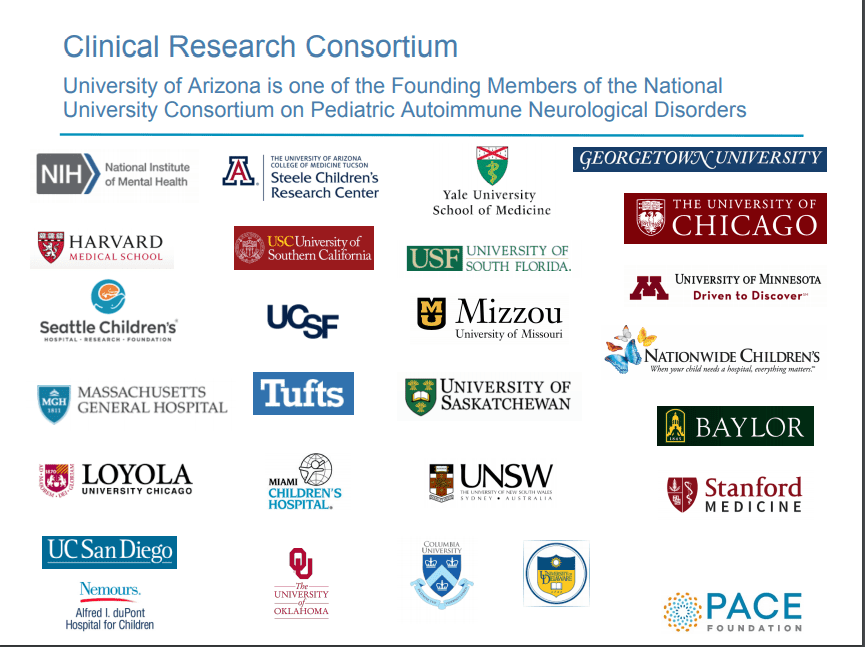
Consortium – 40 different facilities collaborated the current treatment guidelines published in the Journal of Child and Adolescent Psychopharmacology


THIS WEBSITE DOES NOT PROVIDE MEDICAL ADVICE

Disclaimer of Medical Advice:

The Content is not intended to be a substitute for professional medical advice, diagnosis, or treatment.

Always seek the advice of your physician or other qualified health providers with any questions you may have regarding a medical condition.

The information, including but not limited to, text, graphics, images and other material contained in this website are for informational purposes only.

The sole purpose of this website is to promote a broader consumer understanding and knowledge of my lived experience with a health topic that affected my family.

It is not intended to be a substitute for professional medical advice, diagnosis or treatment.

Always seek the advice of your physician or other qualified health care provider with any questions you may have regarding a medical condition or treatment and before undertaking a new health care regimen, and never disregard professional medical advice or delay in seeking it because of something you have read here or anywhere else on my blog.


Subscribe for the latest updates on our Journey Back to Health. What to expect when encephalitis becomes an unwelcome visitor in your home!

We promise to never sell, barter, share or trade your information, “Namaste”.

Subscribe to Our Newsletter