
PANS/PANDAS

What about me!

What about me indeed…

It’s 6:18 pm and I had just woken up from a nap on the couch, woken by the sounds of my husband emptying the dishwasher and starting dinner. I fell asleep about 5, saying “kids need their meds, I am just taking 5 minutes and then I will get them ready.” Yet, here I was, 2 hours later, off schedule and sleeping once again. I hate napping, it makes me feel like crap. This time was no different. Whenever I wake up, I have to open and close my fists to get my hands working, because lately the little fingers on each hand have a pulsing and prickling feeling to them. It’s a weird sensation because they are not really numb, I can move them, so it’s more like that feeling you get from sleeping on your arm. Anyway, I woke up feeling crappy and guilty about sleeping instead of parenting, guilt aside napping isn’t unusual for me, I nap most days and feel bad every single time but honestly, I am usually just too tired to resist 5 minutes here and 20 minutes there. Anyway, tonight after I unfroze my feet (because they also seize up when I sleep) I wandered into the kitchen to finish dinner. I try for my own sanity to just crock pot, slow roast or Instant Pot everything and today was no different. I was grateful I had put a large joint of beef in the oven before we left today, so at least that part was taken care of.  The kids are getting tired of eating “stew” and soups but my energy is so depleted by dinnertime (and we follow a Paleo diet meaning everything has to be made from scratch), gourmet meals are just not realistic. I do know they are going to get fed. It will be edible and organic and nutritious but other than that, I don’t really know what to do about it all. I just seem to be a slower, less energetic, less motivated version of myself lately. I have mentioned before that I have my own battle with Lyme, even though the official diagnosis is fibromyalgia, yet what to do with this information, I don’t know. I don’t have the energy to even think about it. However, the day may be coming soon when I do

IEP meetings that don’t scare me

Friday was our yearly IEP update meeting for B. Not going to lie, had very few demands or expectations. Was just hoping to keep slipping by and doing what we are doing. Life has become easier and I like it. Again, remember that energy level I mentioned before? It applies to being able to wake up every day and manage emails and phone calls from anyone, never mind school. I just can’t do it anymore. Call me before 9 am and chances are real good I am not answering that call, call me after and I am not making it out the door quickly even if you want me to. There was a time in the past that I would send B off to school, get ready and wait, just wait for the phone call to tell me to come back and pick him up. Years of this, years and years of school management under my belt that I no longer have to be ready for. Imagine that? Just as well anyway, because as I already mentioned, not moving fast in the mornings anymore. If I had to come and pickup early now, I would have to actually shower and change out my PJs first, so fair warning please don’t call me in a panic before 11am, it is just not going to happen.

Anyway, Friday, IEP meeting. Raced to school for 9 am!!! Late (what’s new?), needed to make up time so husband was driving like a boss and we made it there dead on the nose, signed in and immediately, (adrenaline pumping) … have to leave school for a fire drill! I actually wasn’t upset, I went back to the car, spent time catching up on my breathing and finished my coffee. Went back in feeling a little more ready for what was to come.

Meeting went great. B is doing so well we were able to discuss removing some modifications meaning he is going to be more ready for high school classes beginning next year. Yes, B is actually heading to High School. I never imagined I would see the day, I always hoped but truthfully, after so many years of school refusal and school trauma, it was hard to imagine B functioning, happy and actually working toward independence in any classes let alone all of them. He has even managed to go from 4th-grade math to 6th-grade math in less than one year. If he can close the gap that fast again this year, he will enter 9th-grade math classes WITH his peers. Phenomenal and truly an achievement for a kid who was unable to manage life for many years especially after 3rd-grade. Interesting side note: Modifications in an IEP are different than accommodations and in high school that may potentially cause an issue.

So, more progress, more good things, more to look forward to. Treatment wise, both are now holding steady. Currently one (B) 85% recovery (just so many good things happening but still, he finds it challenging to manage stress and I wonder if this is ever going to change just by treating the Lyme). I cannot really say with A, if pushed perhaps about 80% better than when we started, but that nausea really took a toll and caused more stalling and backsliding. Removing the orthodontics (braces) from A’s teeth actually seems to have worked. Nausea no more. Or at least barely ever. She still gets occasional moments when she has to sit down and take a minute but the non-stop never-ending nausea has gone. No Zofran needed for the last two weeks at least. I now believe it may have been a migraine thing, she has/had also been complaining of intermittent pain over her eyes. The nausea was fairly chronic, and migraine makes more sense to me than allergy to the metal in the braces or other reasons why the braces would be the culprit. Maybe it was just the act of moving the teeth or jaw. I don’t know. I don’t but three weeks after taking off the braces, the nausea is slowly becoming a memory so, yeah that’s weird, but everything with us seems to be weird. I personally have learned to stop questioning why and just move on to the next problem.  I think she is still mildly flaring from having the braces on and then off, she is having moments here and there of goofiness, talking nonstop, following me around incessantly and some other PANS-ish symptoms. Again, not super sure why. Could be the cough-cold season, flu season, being back in school or just more of a sawtooth recovery than B. Thankfully, now the nausea has stopped the supplements and herbals are back on board and that’s helping tremendously. I think we will start improving again. So that’s it. I don’t know what day we are even at anymore, I know we have been home for 6.5 weeks and things have been great and not so great, and great again. Little things throw us through a loop but overall we keep improving. I am no longer trying to figure out how to pay for IVIG, no longer looking at rituximab, no longer praying for relief and best of all no more frantic doctor shopping. Good start to October, at this rate we might actually be able to afford Christmas!
How Many Times…

How many times …

I had reason tonight to go back over a series of blog posts about a program we had completed in 2011. As I was reading through the Brain Balance blog roll I realized we had actually finished that program with hope in our heart and a skip in our step. Okay perhaps we were not quite that enamored but certainly, we felt like we were in a really good place. When I wrote any of those earlier blog posts, I had no idea that those brief periods of respite (that we celebrated so much) would last a few months and then cycle right back around again. In reality, by the end of 2013, we had cycled into a far worse place than we had ever been before. If you have read this blog from the beginning you will know that that was quite an achievement.

By September 2013, a truly awful milestone had been reached. So even though we had enjoyed slightly better behavior, slightly less stress, slightly calmer days and nights, and definitely more cognitive ability during those 12-18 months after the BB program, it didn’t last, because in our world recovery has never lasted.

Why even write the blog? I don’t make money doing this. I lose sleep because I only find time to do this late, late, late at night. I don’t have a million subscribers or even a YouTube channel. I often ask myself what’s the point, why do I keep writing this? Living in the chaos that stretched into years, I knew I would forget the nuances, the little things, the truly chaotic nature of what was going on and when? Although it probably would be better for us all if I had just forgotten a lot of what happened and moved on. Initially, I truly hoped someone would read what I was writing and say “I wanted to contact you and let you know, I know what this is, I know how to help you” but as desperate as we were that sadly never happened. We spent years hoping for the cavalry and by the time I started writing this blog we were really heartbroken and lost about what was going on with our beautiful, cute, adorable son. It was only many years later it eventually occurred to us WE ARE THE CAVALRY. We have spent years on this hamster wheel, praying to get off never really knowing how but we never stopped trying. I, like millions of other parents, refused to give up. When we went from one doctor to another, from one mediocre treatment to another, we never gave up.

When I first learned that we had a spectrum disorder at 18 months, I thought to myself “well, we are not doing this, he’s going to be fine” and being who I am, I got on with the business of healing my child. I really thought, for sure by the time he was 3 we would have this thing resolved. I wasn’t worried. I had it in hand and was egotistical enough to believe that by the time he was eligible for early intervention, we wouldn’t even need it. Later, when the Easter Seals combed over paperwork the Arizona Early Intervention program had sent when we moved, I assured our caseworker that we would be done before his 3rd birthday and a place in the local school district was unnecessary. Just help us get settled I had said and we will take it from there. Yet when he started developmental pre-K on his 3rd birthday, screaming relentlessly as I left him at the school, I allowed them to placate me as they reassured he would be fine and I thought, “Okay, I am a little disappointed we didn’t get to where we needed to be already but by kindergarten, we WILL be sorted.” It turned out that kindergarten actually went pretty great. We figured we were making progress, we congratulated ourselves because what we were doing was working. A little later, when we again began having challenges, I really still had great hope. As part of that hope, we switched to a private school for 2nd grade, I thought, “HA! I had missed a part of our puzzle, I believed I had figured it out. It was the school that was the problem. I naively thought, “the new school will make it better for us all” and for a while it did. Around this same time, we had completed Brain Balance and then chose to re-enroll in another round of OT about 6 months later. It was actually going well in the small Christian school he was enrolled in.  However, we all know how this story goes and by the end of 3rd grade, we found ourselves right back to square one. It was a perfect storm of both a challenging teacher and what we now know was a defunct immune system.  These autoimmune triggers can wax and wane depending on environmental situations, bacterial exposures, viral loads and even just from the etiology of the disorder, we didn’t know this at the time. Those behaviors were actually a symptom, not a side effect of what was going on. Those behaviors controlled all of us because we never truly knew what we were really dealing with. Even though many, many, many times we allowed ourselves to believe we were on the winning side of all that was going on.

Anyway, nostalgia night, that’s really all this post is about. I have been reading back through my blog and I see how many times we truly believed we had cracked the code. Even now – as well as we are doing – I know to err on the side of caution. I know from past experience this recovery could just be a fake out, this could all be smoke and mirrors. What we have going on may just have hit a down cycle and that alone might be the reason for our calmer normality. Next week, next month, even next year we might very well be right back where we started, but until then we choose to believe the cavalry finally arrived. Ever the optimist, I am choosing to believe that this time, this is THE time we finally have it figured out.

Interrupting regular programming…

TEN THINGS A NEWLY DIAGNOSED

PANS/PANDAS PARENT NEEDS TO KNOW

Interrupting regular programming to talk about chronic Lyme and PANS/PANDAS and Neuroimmune Diagnoses

My children and I are in NE treating Lyme, this is true, but the chronic condition my children are diagnosed with is actually PANS (Pediatric Acute-Onset Neuropsychiatric Syndrome, OR as it has morphed across the internet from the original moniker – Pediatric Autoimmune Neuropsychiatric Syndrome). This basically means my kids both have neurological and physical challenges associated with their illnesses.

I created this document for the parents who find their way to our Facebook Group. Our, meaning an organization I am currently working on. PAE KIDS SC is a parent-led grassroots organization focused on educating the community on better recognition of PANS. We are reaching out and speaking with doctors, schools, and therapists in South Carolina as well as asking for an advisory council in this state. I also thought this might help anyone who finds my blog get up to speed on the acronyms and message board topics should they wish to explore the topic further.  (Someone recently told me this was overwhelming. I agree, it probably is. Bookmark this page, print it off, make notes, rest assured you will come back to this information (not just here but across the web) time and time again and eventually you will be adding things to this list. As a new parent thrown into this – it is shock and awe, but you will quickly grasp your bearings, begin researching and before the clock strikes midnight, you will realize you have searched Pubmed backward and forward and are arguing treatment protocols like a pro! Read this once, keep it, pass it along, read it again, and when you know more, come back and update us, please. Crowdsourcing works for all kinds of things now, why not healing our children?)

TEN THINGS A NEWLY DIAGNOSED PANS PARENT MIGHT NEED TO KNOW

Understand the diagnosis and acronyms: PANS stands for pediatric acute-onset neuropsychiatric syndrome, this acronym is also sometimes expanded to pediatric autoimmune neuropsychiatric syndrome. PANDAS (Pediatric Autoimmune Neuropsychiatric Disorders Associated with Streptococcal Infections) is a subset of PANS. There is also another (older) acronym – PITANDS, which stands for Pediatric Infection-Triggered Autoimmune Neuropsychiatric Disorders. “The NIMH Investigators discovered that the OCD, tics, and other symptoms usually occurred in the aftermath of a strong stimulant to the immune system, such as a viral infection or bacterial infection. The first cases were given the name PITANDS for Pediatric Infection-Triggered Autoimmune Neuropsychiatric Disorders. The first reported cases of PITANDS followed infections with influenza, varicella (chickenpox), and streptococcal bacteria (strep throat and scarlet fever). (See Reference #3 for descriptions of the PITANDS cases.) Later cases were reported to occur in association with Lyme disease and mycoplasma infections (“walking pneumonia”). The NIH investigators chose to focus on OCD symptoms that occurred after streptococcal infections (the PANDAS subgroup) because of a connection between OCD and Sydenham chorea, the neurological form of rheumatic fever.” click the link to understand read in its entirety.

Who is Susan Swedo, MD? “Susan Swedo is a researcher in the field of pediatrics and neuropsychiatry, and since 1998 has been Chief of the Pediatrics & Developmental Neuroscience Branch at the US National Institute of Mental Health.” Wikipedia. Swedo wrote the first paper on PANDAS.in 1998. “In the early 1990’s, investigators at the National Institute of Mental Health (Drs. Susan Swedo, Henrietta Leonard, and Judith Rapoport) were doing studies of childhood-onset OCD and observed that some of the children had an unusually abrupt onset of symptoms. Unlike typical cases of OCD, where symptoms begin gradually and may be hidden by the child for several weeks or months (because of their embarrassment over the irrational nature of the worries and behaviors), the children in the PANDAS subgroup reported a very sudden, dramatic symptom onset. The obsessive thoughts, compulsive behaviors, and motor or vocal tics appeared “overnight and out of the blue” and usually reached full-scale intensity within 24-48 hours.” NIMH

Going to the doctor: How do I know he won’t laugh out loud when I suggest PANDAS? Sadly, they probably will at least look at you sideways but always, your first stop is likely to be your pediatrician. This should always be where you go first anyway, however, it is probably better if you do not immediately suggest PANDAS; PANDAS is a subset of PANS and is strictly tied to a strep infection. If you ask about PANDAS, your doctor will possibly culture your child’s throat, see a negative rapid strep wand and move on. However, Strep can exist in multiple areas both in and on the body, it hides and is elusive; potentially, unless your child has a raging fever, a really sore throat with sore joints and body aches, your doctor will likely dismiss your thoughts of PANDAS. Sadly most physicians have now been taught that this is a rare disorder; however, it is estimated conservatively to affect more than 1/200 children. Parental complaints of misdiagnosis fill the internet rather than stories of their concerns being taken seriously. So we suggest (BEFORE going to your doctor’s office) that you print off a copy of the Diagnostic flowchart from PANDAS PPN and the guidelines for diagnosing PANS/PANDAS to take with you to the appointment. Be aware to firmly state to your doctor that anecdotally it is thought that a large percentage of parents who found themselves in this world did NOT experience a sudden onset with their children. Most had noticed odd behavior prior to the sudden onset of crippling OCD or TICS that their children experienced. It is also worth noting what OCD really entails because it is often not at all like they portray in the movies.

The diagnostic guidelines link above will allow you to read more on the many hidden OCD manifestations that you may have missed prior to realizing this debilitating condition. Please also arm yourself with this information: Pace Foundation Guidelines

Question: If my pediatrician sends me away, how else do I get a diagnosis of PANS or PANDAS? Firstly leave the linked information above with your pediatrician. They may not have had time to read the latest research and standards of care for PANS patients, they should have but they genuinely may not have had time and it is worth discussing these flowcharts and standards of care with them. However if your pediatrician refuses to accept a possible PANS option or the care is limited at your family practice, you will be forced to move on. Technically these disorders are a clinical diagnosis but most doctors may want to run some (not all – perhaps request * first) of the following labs for infectious and vector-borne triggers.

a. ANTI-STREPTOLYSIN O Titers * (a measure of the blood plasma levels of antistreptolysin O antibodies used in tests for the diagnosis of a streptococcal infection or indicate a past exposure to streptococci.)
b. ANTI-DNASE B Titers * (blood test to look for antibodies to a substance produced by Group A Streptococcus. This is the bacteria that causes strep throat. When used together with the ASLO titer test, more than 90% of past streptococcal infections can be correctly identified.)
c. Streptozyme * (screening test for antibodies to the streptococcal antigens NADase, DNase, streptokinase, streptolysin O, and hyaluronidase. This test is most useful in evaluating suspected poststreptococcal disease following Streptococcus pyogenes infection, such as rheumatic fever.)
d. Mycoplasma pneumoniae IgG and IgM * (Two types of antibodies produced in response to an M. pneumoniae infection may be measured in the blood, IgM and IgG. IgM antibodies are the first to be produced by the body in response to infection. Levels of IgM rise for a short time period and then decline, often remaining detectable in the blood for several months. IgG antibody production follows IgM production, rising over time, and then stabilizing. Once a person has had a mycoplasma infection, they will typically have some measurable amount of mycoplasma IgG antibody in their blood for the rest of their life. In order to diagnose an active M. pneumoniae infection, a health practitioner may order both M. pneumoniae IgM and IgG antibody tests as acute samples and then collect another M. pneumoniae IgG test two to four weeks later as a convalescent sample. This combination of tests is ordered so that the change in the amount of IgG can be evaluated and because some people, especially infants and those with compromised immune systems, may not produce expected amounts of IgG or IgM) LabTestOnline
e. Lyme Western Blot and consider an IGeneX or Galaxy Lab test for coinfections of Lyme. Lyme disease is caused by a number of different strains and species of Borrelia bacteria, generally, Borrelia burgdorferi in the United States., while these two tests are typically more expensive than the standard Western Blot there is often more diagnostic success from these tests especially for – Babesia, Bartonella, Ehrlichia/Anaplasma.
f. IgG, IgA and IgM levels. *
g. IgG Subclasses, IgG1, IgG2, IgG3, IgG4
h. Ferritin * (iron levels: These tests can show how much iron has been used from your body’s stored iron. Tests to measure iron levels include: i. Serum iron – This test measures the amount of iron in your blood. The level of iron in your blood may be normal even if the total amount of iron in your body is low. For this reason, other iron tests also are done. ii: Serum ferritin – Ferritin is a protein that helps store iron in your body. A measure of this protein helps your doctor find out how much of your body’s stored iron has been used. iii: Transferrin level, or total iron-binding capacity. Transferrin is a protein that carries iron in your blood. Total iron-binding capacity measures how much of the transferrin in your blood isn’t carrying iron. If you have iron-deficiency anemia, you’ll have a high level of transferrin that has no iron.
i. Ceruloplasmin (Ceruloplasmin (or caeruloplasmin) is a ferroxidase enzyme that in humans is encoded by the CP gene.Ceruloplasmin is the major copper-carrying protein in the blood, and in addition plays a role in iron metabolism.)
j. Serum copper (Low serum copper, most often due to excess iron or zinc ingestion and infrequently due to dietary copper deficit, results in severe derangement in growth)
k. Vitamin D * (25-OH)
l. Pneumococcal antibody panel * (13, 14 or 23 serotypes)
m. CBC with differential and platelets *
n. Free T3, Free T4, TSH *
o. ANA with reflex *
p. Hemoglobin A1c
q. Coxsackie A titers/ Coxsackie B titers
r. EBV (Epstein Barr) Panel
s. HHV-6 titers
t. Parvovirus B-19 titers
u. B12, folate
v. SMA-20
w. Anti-thyroid antibodies *
x. Plasma amino acids because the symptoms of PANS/PANDAS/PITANDS are very similar, it is the trigger that differentiates the disorders. PANDAS is specifically triggered by strep, PITANDS by Infection, and PANS -: “The National Institute of Mental Health (NIMH) acknowledged that PANS, a treatable autoimmune condition, could be triggered by any number of infections (other than strep) and that patients could be diagnosed with the condition even if the infectious trigger(s) was unknown. In 2012, the NIMH released diagnostic guidelines for PANS. There is a growing number of publications on PANS, with the Journal of Child and Adolescent Psychopharmacology (JCAP) publishing a special edition on the syndrome in February 2015.” Moleculera Labs P.A.N.S. Most doctors currently use the PANS/PANDAS acronyms, but doctors are also beginning to refer to this as autoimmune encephalopathy/encephalitis (Encephalitis is often caused by an infection (bacterial, viral, parasitic) but can be due to autoimmune diseases. Encephalopathy is an altered mental status without a fever that can be due to many different causes including drug effects, lack of oxygen and toxins).

How to find a reputable doctor to treat my child? Join a Facebook Group. Other parents are often your best source of information but try to remember what worked for one probably worked for that one… all our children are different and all present differently. Allow a doctor the courtesy of diagnosing your child correctly (low iron, thyroid issues, and many other disorders can cause similar symptoms). NMDA Autoimmune Encephalitis can be life threatening which is a really good reason to fight for a correct diagnosis. Many parents manage symptoms at home by using homeopathy, essential oils, along with pharmaceuticals, herbal protocols, and supplements to name a few. The message boards are awash with information, choose wisely and use those message boards to locate a doctor that most aligns with your preferred method of treatment (MAPS/homeopathic/integrative., etc). Most of the groups are closed and the admins will want to know if you suspect your child is heading to a PANS/PANDAS diagnosis before they accept you.

Some available groups (all can be searched from Facebook):
Homeopathy & Alternative Pandas Parents
PANDAS/PANS Institute (run by Rosario Trifiletti MD, PhD, LLC a leading expert in treating PANS/PANDAS and neuroimmune disorders in pediatric patients).
Parents of Children with PANDAS/PANS/LYME/TICK-BORNE
Recovering Kids| Biomedical Healing
Google your home state + PANDAS Parents Support Group to connect to local groups
PANDAS Autoimmune Encephalitis
Parents of Children with Autoimmune Unite
PAN(DA)S IVIG Insurance Triumphs

Know the lingo: An immunoglobulin test measures the level of certain immunoglobulins, or antibodies, in the blood. Antibodies are proteins made by the immune system to fight antigens, such as bacteria, viruses, and toxins. The body makes different immunoglobulins to combat different antigens. For example, the antibody for chickenpox isn’t the same as the antibody for mononucleosis. Sometimes, the body may even mistakenly make antibodies against itself, treating healthy organs and tissues like foreign invaders. This is called an autoimmune disease. The five subclasses of antibodies are:

Immunoglobulin A (IgA), which is found in high concentrations in the mucous membranes, particularly those lining the respiratory passages and gastrointestinal tract, as well as in saliva and tears.

Immunoglobulin G (IgG),
the most abundant type of antibody, is found in all body fluids and protects against bacterial and viral infections.

Immunoglobulin M (IgM),
which is found mainly in the blood and lymph fluid, is the first antibody to be made by the body to fight a new infection.

Immunoglobulin E (IgE),
which is associated mainly with allergic reactions (when the immune system overreacts to environmental antigens such as pollen or pet dander). It is found in the lungs, skin, and mucous membranes.

Immunoglobulin D (IgD),
which exists in small amounts in the blood, is the least understood antibody.IgA, IgG, and IgM are often measured together. That way, they can give doctors important information about immune system functioning, especially relating to infection or autoimmune disease. Kids Health

IVIG: Intravenous Immunoglobulin Therapy. Immunoglobulin is part of your blood’s plasma. It has antibodies in it to fight germs or disease. When people donate blood, this part can be separated out. Then it can be given to you through a vein in your arm, or IV. If you get IVIg, it can help strengthen your immune system so you can fight infections and stay healthy. Liquid immunoglobulin is taken from the blood plasma of donors who are screened to make sure they are healthy. The plasma is tested for serious infections like hepatitis and AIDS. The plasma is purified before it’s used for IVIg therapy.

Plasmapheresis: Plasmapheresis or therapeutic apheresis is a “blood cleaning” procedure in which the child’s blood is removed through an intravenous catheter and processed by a plasmapheresis machine, which spins it to separate the formed elements (red blood cells, white blood cells and platelets) from the plasma (liquid portion of the blood which contains proteins, including antibodies and other immune components). The plasma is removed and replaced with equal volumes of albumin. The albumin is mixed with the child’s blood components and returned to his body through a second intravenous catheter. Because the blood volume to be processed is relatively large, and multiple procedures are needed, plasmapheresis often requires insertion of a central line (to ensure adequate venous access for both egress and ingress of the blood). In older children or those with superior antecubital veins, the procedure can be accomplished peripherally. https://www.pandasppn.org/plasmapheresis/

Rituximab: Rituximab, sold under the brand name Rituxan among others, is a medication used to treat certain autoimmune diseases and (in much higher doses in combination with other drugs) types of cancer, it is a genetically engineered chimeric murine/human monoclonal IgG1 kappa antibody directed against the CD20 antigen. This is not a first line of defense and should be considered only with careful discussion with a knowledgeable provider.

Low Dose Naltrexone: (LDN) what is LDN “suggest that LDN may operate as a novel anti-inflammatory agent in the central nervous system, via action on microglial cells. These effects may be unique to low dosages of naltrexone and appear to be entirely independent of naltrexone’s better-known activity on opioid receptors. As a daily oral therapy, LDN is inexpensive and well-tolerated.”

Mast Cell Disorder: (cytokine storms). Many parents feel their children have this disorder in addition to or as a trigger for PANS or PANDAS. “Mast cell activation syndrome (MCAS), also commonly referred to as mast cell activation disorder (MCAD), is an immunological condition in which mast cells inappropriately and excessively release chemical mediators, resulting in a range of chronic symptoms, sometimes including anaphylaxis or near-anaphylaxis attacks.” Mast cell activation syndrome

Suramin:  a small, randomized clinical trial conducted by Robert Naviaux, MD, PhD, professor of medicine, pediatrics and pathology, and colleagues at University of California San Diego School of Medicine have found that a single intravenous dose of suramin produced dramatic, but transient, improvement of core symptoms of autism spectrum disorder…” To help fund further research into Dr. Naviaux’s cell danger response research which may potentially benefit any autoimmune or neuroimmune disorder, you can donate directly Donate to Suramin Phase II Trial.

Is there a specific blood test to tell me if my child has PANS/PITANDS or PANDAS? The Cunningham Panel™ aids in the diagnosis of Neuropsychiatric Disorders. This test is typically available through specialist providers of health care for children with suspected PANS; however, if you wish to order this test through your pediatrician they will need to contact Moleculera Labs and obtain a kit, the instructions are enclosed for the patient and the kit is shipped directly to your home. The patient locates a lab to draw the blood for testing and the lab typically ships the specimen by return to Moleculera. This may need to be completed at an outside testing lab such as Any Lab Test Now or a similar type location. To order the panel (you will need a physician): How to order. The purpose of the Cunningham Panel™ is to provide laboratory results to physicians as an aid in their diagnosis of Neuropsychiatric Disorders. This panel measures the level of circulating antibodies directed against antigens concentrated in the brain and measures the ability of these and other autoantibodies to increase the activity of an enzyme (CaMKII) that upregulates neurotransmitters in the brain. Cunningham Panel Neuropsychiatric Disorders tests: The panel consists of five tests. Four of these tests provide results that are expressed as a titer, or final dilution, at which an endpoint reaction was observed on an Enzyme-Linked Immunosorbent Assay (ELISA) format. These tests measure circulating levels of autoantibodies directed against specific neuronal antigens, including: Dopamine D1 receptor (DRD1), Dopamine D2L receptor (DRD2L), Lysoganglioside GM1, and Tubulin. Autoimmune antibodies that bind to these targets may interfere or potentially lead to a blocking or stimulation of the function of these antigens. This, in turn, may trigger movement and neuropsychiatric disorders, along with OCD and abnormal neurologic behavior. The 5th test, CaM Kinase II (CaMKII, Calcium-dependent Calmodulin Protein Kinase II) activation, produces a laboratory value (expressed as a numeric score) that reflects the percent above or below baseline CaMKII activity in a human neuronal cell line. CaMKII is a key enzyme that is involved in the upregulation of many neurotransmitters such as dopamine. CaMKII is also understood to increase the “plasticity” or sensitivity and responsiveness of neurologic receptors to neurotransmitters.

Are there any dedicated treatment facilities?
Stanford was the first academic institution to start a multidisciplinary PANS service. They also hosted the first national PANS conference in the spring of 2013 where they worked to create clear diagnostic guidelines. Stanford along with the The Pace Foundation are groundbreaking clinics. The Pace Foundation “as a strategic partner with the NIMH, the University of Arizona and Banner Healthcare, announced the grand opening of the 1st Center of Excellence (COE) in the world focused on Pediatric Autoimmune Encephalopathy (PAE) The Children’s Postinfectious Autoimmune Encephalopathy (CPAE), on August 30, 2016. The Center treats patients and conducts world-class research on a wide spectrum of diseases (PANS, PANDAS and similar pediatric Autoimmune Encephalopathy disorders). Our goal is for the COE to open clinics throughout Arizona during 2017. … The PACE Foundation is excited to be working with the National Institutes of Mental Health (NIMH) to facilitate cooperation across a group of 13 Nationally Recognized Academic Research Centers across the United States. This effort will help standardize training, education, and treatment for patients suffering from Pediatric Autoimmune Encephalopathy (PAE) diseases like PANS, PANDAS and similar pediatric Autoimmune Encephalopathy disorders. “In reality, these two clinics will only serve you well if you are close to them so most parents have to rely on doctors who are out of network and often out of state. Pandas PPN has a search tool with doctors who will be able to help (Practitioner search) and again, other parents are often your best friend when picking a new doctor. DUKE University will treat some AE patients but some of my friends, have personally reported to me, they were turned away with a PANS/PANDAS diagnosis, ourselves included because we don’t fit their criteria. Duke Neurology

It may be worth calling Pediatric Neurologists or Immunologists in your area to find out if they treat pediatric autoimmune disorders before making an appointment.

Ready to get more involved?
Reach out to your local PANS/PANDAS organization:
MIDWEST PANDAS/PANS Parent Association
New England PANS/PANDAS Association (some amazing graphics and information, especially for schools, are here).
PANDAS/PANS Advocacy & Support IL based support
PRAI KIDS Virginia, PRAI KIDS North Carolina, PRAI KIDS South Carolina (The group I am involved with).
SouthEastern PANDAS/PANS Georgia basedOther Worldwide and US Support Group Information can be found at www.pandasnetwork.org
other resources:
www.pandasppn.org
http://www.moleculeralabs.com/
https://www.anylabtestnow.com/
https://www.galaxydx.com/our-management-team/
http://www.igenex.com/testing/how-to-order-test-kits/

Books:

PANS, CANS, and Automobiles: A Comprehensive Reference Guide for Helping Students with PANDAS and PANS Paperback – June 9, 2016 by Jamie Candelaria Greene (Author) My personal favorite.

PANDAS and PANS in School Settings: A Handbook for Educators by Patricia Rice Doran (Editor), Diana Pohlman (Foreword), Margo Thienemann (Contributor), Darlene Fewster (Contributor), Amy Mazur (Contributor), Janice Tona (Contributor), Kandace M. Hoppin (Contributor), & 1 more

For children: In A Pickle Over PANDAS Paperback – June 1, 2015 by Melanie S. Weiss (Author)

Scour the links provided in this document. These websites will give you access to published research, comorbid diagnoses, treatment options, doctor referrals

Bonus tip 😀 – Know that PANS/PANDAS treatments can be expensive, wine can be found in boxes. It may not be as elegant as glass bottles but it is certainly cheaper.

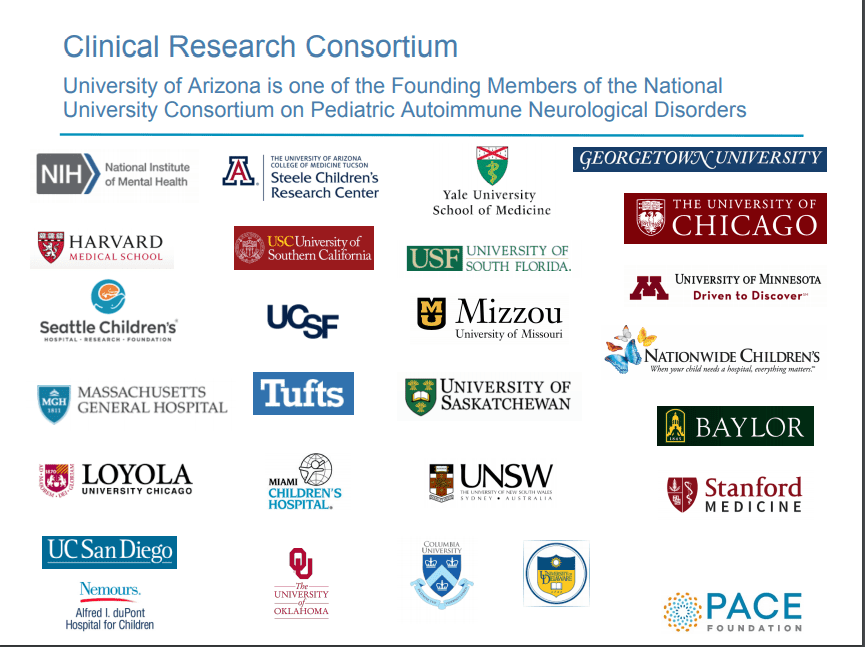
Consortium – 40 different facilities collaborated the current treatment guidelines published in the Journal of Child and Adolescent Psychopharmacology


THIS WEBSITE DOES NOT PROVIDE MEDICAL ADVICE

Disclaimer of Medical Advice:

The Content is not intended to be a substitute for professional medical advice, diagnosis, or treatment.

Always seek the advice of your physician or other qualified health providers with any questions you may have regarding a medical condition.

The information, including but not limited to, text, graphics, images and other material contained in this website are for informational purposes only.

The sole purpose of this website is to promote a broader consumer understanding and knowledge of my lived experience with a health topic that affected my family.

It is not intended to be a substitute for professional medical advice, diagnosis or treatment.

Always seek the advice of your physician or other qualified health care provider with any questions you may have regarding a medical condition or treatment and before undertaking a new health care regimen, and never disregard professional medical advice or delay in seeking it because of something you have read here or anywhere else on my blog.


Captain’s Log, day 100089

Captain’s Log, and it only feels like day 10089

In reality, we just completed day 18 of our 84-day program (not day 10089) but some days it feels like we have been doing this forever. The problem is, once we removed the antibiotic support from the kids, they regressed pretty badly and they are now having one flare after another. This can make life super challenging at the best of times, even just doing basic stuff like grocery shopping or laundry is hard. The oppositional behavior and the irritation are always at maximum overload, which really isn’t unusual but it is certainly been made worse with all these changes.

In PANS kids, behaviors that assist with the diagnosis often exacerbate during a flare, so obsessive-compulsive behaviors or thoughts, severely restricted food intake, exacerbation of neuropsychiatric symptoms, anxiety, emotional lability and/or depression, irritability, aggression, and/or severe oppositional behaviors, age regression and coping skills, motor and/or sensory abnormalities, urinary frequency (which can be highly inconvenient when running errands in a place where NO ONE allows you to use their restroom even if you purchase something from the store) and of course good old sleep disturbances.  Read more at PANDAS PPN. These disturbances make everything a little more entertaining and adds spice to an already challenging adventure.

So day 18. Do we see any progress yet? No. None. Still pretty much status quo at this point but truth be told, I would be shocked if after 12 years we saw an immediate improvement.

What do we see so far? We have our new routine down pat. The alarm on my phone rings morning, noon and night and the kids follow along checking the boxes in their folder. Tinctures three times a day targeting Lyme, biofilm, and candida, and then additional supplements supporting detox and rebuilding the immune system, and adrenals, etc. The kids are also following a no sugar, no soy, wheat, dairy, corn, or rice diet and avoiding all fruit and starchy veggies. It was tough to convince two sugar, carb addicts to change their ways cold turkey but they are doing it and they never waiver, even in the face of traditional summer temptations like ice cream and cotton candy. When all is said and done, they really want to be well and are putting in the work to get there.

Other than that, twice a week on Monday and Friday afternoons we go to the clinic. Once there, the kids do short bursts of exercise, breathing, foot baths, an adjustment, cold laser therapy and finally a quiet 22 minutes of brain music, then we head back to the camper. In our downtime, we have kept ourselves super busy which is fairly easy because the beaches here are really spectacular. So while our exodus from South Carolina was fast and seemed frantic, we are making it work for us. The camper could be bigger, the progress a little faster, but for now we are committed to taking the supplements and going into the clinic biweekly. Week 4 is just around the corner, we are ready to see some progress.

PANS, PANDAS and Lyme Disease – what’s the connection?

PANS, PANDAS & life after a diagnosis of Lyme Disease

So in the 3 years since I put away my keyboard and started focusing on other things, a lot happened in our lives. In August 2014, when I wrote this post, I had no idea what was even possible for us going forward. We had settled into the uneasy idea that our underlying issue was simply developmental trauma disorder or another genre of attachment disorder. We were sold on the idea that the emotional trauma from being placed for adoption at birth had altered his ability to reason rationally. Therefore, the residual pain and anger over this rejection were driving the outrageous behavior we were and had always been seeing. Everything I read about the different attachment styles matched much of what we were challenged with at home. It seemed to fit the best of what we had heard so far.

Following that path of reasoning, we found and paid a searcher $1500 who set about finding his birth family. It took less than a month and we had a real, valid, biological connection for him and several months later we headed to his birth country for a family reunion. While this genuinely touched his heart and shifted his perceptions about his adoption and his birth mother, it didn’t help stabilize any of the behavior. The rages, the uncontrollable depression and the gnawing anxiety remained constant. His birth mother was overjoyed with the reunion and we still gratefully maintain the connection with his birth family. After we returned from that trip, it was interesting because we did see part of his personality shift. He became less aggressive toward me, but instead his anger became more directed at himself. It did give him some peace over his identity but he still struggles with not looking like us. Being part of a mixed race family has its own group of challenges, none insurmountable, but it definitely adds an extra layer to be aware of. Anyway, once he finally knew who he looked like, he knew she cared for him, he knew that she thought about him often, he talked less and less about being rejected and more and more about just feeling hopeless and joyless.  The birth family connection had not lifted his depression at all, but he does has a deeper peace and understanding in regards to his birth and adoption which was important to us all. He truly knows that he is loved.

Despite that reunion, we were still struggling to manage. He was still deeply sad and depressed, he constantly expressed wanting to die, and he was irritable and angry all the time. His self injurious behaviors and obsessive thinking continued without provocation. That same year, he underwent a tonsillectomy and adenoidectomy because of extremely large tonsils and constant strep infections that he struggled with since being a baby, but we also prayed it might help his behavior.  It helped a little but once again had to take stock, steel ourselves and figure out what else might be going on. We still wondered if there were some residual anger related to his adoption and so arranged for him to go to and stay at a treatment facility in Colorado hoping that they could tease out more of his true challenges. In the meantime, (because we always try to be two steps ahead) we also ordered a Cunningham Panel, (Moleculera Labs – AN AUTOIMMUNE NEUROBIOLOGY COMPANY) but those results were put aside while we focused on Colorado.

We headed out west in the summer after speaking extensively with the facility he would go to. We were confident that if anyone could tell us if this was an attachment disorder, it would be here.  Less than a week into their program, we were called into the office and given their professional opinion, we were not dealing with RAD. Perhaps an anxious attachment scenario but not true RAD. We were told to take him home and pursue the bipolar angle more thoroughly. We were still very confused but at least going to Colorado helped us gain some clarity in our situation and we left there feeling confident that the attachment part could be put to rest. I will be forever grateful for the work The Institute for Attachment does, especially for the foster and adoption community which we are still very much a part of, but that was not where our personal resolution was to be found.

We returned home with the intention to do the bipolar work up. Take the meds, accept the diagnosis and move on but all the time my mind was fixated on the Cunningham Panel results. Two of the test results had been at the really high end of normal, or the really low end of abnormal, but that told us something didn’t it?  We met with our long term integrative neurologist and explained what we learned in Colorado. This doctor then confirmed, that based on the Cunningham Panel, he now thought we were dealing with P.A.N.S. or P.A.N.D.A.S. (along with mitochondrial disorder).  There were no positive (ASO) strep titers so it was a P.A.N.S. acronym for our diagnosis. As an aside, this latest diagnosis brought our list up to a whopping 16. Yes, 16 – we had so many diagnoses, there was barely room on an 8.5 x 11 sheet of paper. Along the way we have been classified as: (in this order) PDD-NOS, Autism, sensory processing disorder, ADHD, bipolar 1 rule out, depression, mood disorder NOS, anxiety, borderline personality traits emerging, auditory processing disorder, epilepsy (temporal lobe complex partial seizures), tourette syndrome, ODD, OCD and developmental trauma disorder. Now we were being told it was an postinfectious autoimmune encephalitis. We actually didn’t understand that this is what P.A.N.S. meant at the time but of everything we had heard up to this point, the P.A.N.S. diagnosis actually made sense. We left that appointment still not really knowing what to do or what the treatment plan needed to be but we were one step closer to being on track.

We had the diagnosis but now needed a plan of action:

Neither of us knew what we should do next. My husband and I just kept saying, what do we do with this new information? Thankfully by this time, B was recovered from the tonsillectomy he had in 2015 and his behavior and outbursts had continued to improve. He had more control and had actually been able to return to school. Cautiously, he had started back in 7th grade after being out of the public school district for over 2 years and he settled right back in. As he returned to school, we were still considering what all these behaviors could best be explained by. We relooked at that Cunningham Panel, thought seriously about the P.A.N.S. presentation and considered the mitochondrial disorder. I spent many days and nights researching P.A.N.S. and everything I read just kept confirming our situation.

We decided we would find the best P.A.N.S. doctor we could, and make an appointment. We of course waited an extraordinary amount of time as is always the case for any doctor in our world, but finally the time came and we took ourselves off to Washington DC.

We got to DC in September of 2016 (remember this is 12 years after this journey began) and she quickly and easily confirmed the P.A.N.S./P.A.N.D.A.S. diagnosis. Citing the periodic limb movement disorder as a big clue, the constant strep, ear infections, mycoplasma pneumonia bouts (3), coxsackievirus x 3, scarlet fever, asthma, allergies, sleep disorders, high liver tests, low iron, low vitamin D, the list went on and on. We had all the markers and behaviors for P.A.N.S. We thought HALLELUJAH Our child has a chronic autoimmune disorder. Not something typically celebrated but we were really celebrating finding a doctor who validated that there was something medically wrong and this “something” actually made sense. Both our children were diagnosed with P.A.N.S. that day.

Pediatric Acute Onset Neuropsychiatric Syndrome (P.A.N.S. – the MacDaddy of P.A.N.D.A.S.). My daughter’s strep, OCD, separation anxiety, thyroid challenges, ANA tests, rheumatoid symptoms all added up to the same issues her brother was having. Different, less violent presentation but all adding up to the same thing. We had officially confirmed that additional diagnosis on our list… not only had we reached that 16th diagnosis, we had now gotten it confirmed TWICE. We thought surely there is a prize for this, but turns out it’s just a large doctor bill, a prescription for antibiotics and a request to return in 6 weeks.

In true us fashion, the first antibiotic was short lived (we are allergic to everything), a rash developed quickly and so we moved to a different antibiotic. Six weeks later we went back to the clinic, agreements still of a diagnosis of P.A.N.S. and discussion of IVIG. IVIG (intravenous immunoglobulin) being the gold standard treatment for children with P.A.N.S./P.A.N.D.A.S. We felt like the nightmare finally had an ending. However, this doctor was out of state and therefore out of network and it turned out the IVIG was going to be around $18,000 per child, and we had two children who needed it. Additionally, this wouldn’t be a one time deal, this could mean multiple infusions of IVIG to get them back to homeostasis. It just wasn’t happening. Our fortune was long ago spent on the plethora of doctors we had already seen.  To get to DC we had cashed out the last of our life insurance policies, the well was to dry to even contemplate picking one child for IVIG, not that we could but even that wasn’t an option. We returned home a little deflated but with another prescription and an instruction to return again in 6 weeks. Six weeks later we are back at the office. It began as a typical appointment like every other; however, during our discussion, somehow we ended up cycling back around to the idea that this may possibly be bipolar. We were momentarily thrown into confusion. The antibiotics were working, slowly yes but the symptoms were alleviating, the tonsillectomy had proved wildly positive over the long term, school was going reasonably well and his rages had decreased by at least 50% but here we were, back entertaining the idea of him being bipolar 1. My husband and I were a little dumbstruck but the doctor went on to explain that after all the testing came back and with the history we provided, it was no longer certain that we were dealing with an autoimmune process and she didn’t want to miss a diagnosis of bipolar. Honestly, we did understand. We get it, doctors are in a precarious position, when they are right we admire, respect and adore them, if they are wrong – we sue! I get it. Truthfully, I would never sue (ha – so many opportunities, so little time) but I can absolutely respect a doctor for covering all bases. Anyway, as we got ready to leave, we were told to stay on the antibiotics and return in 6 months. SIX MONTHS. My still suicidal, self harming, fast becoming anorexic child, plus my other one who we now knew was equally as sick, had to go home and do nothing but one antibiotic for 6 months. We felt like we were being dismissed and the idea of waiting for 6 months, while doing nothing, was just not an option. My mind had already been kicked into gear (remember 2 steps ahead), as part of the testing this doctor had done lyme testing. We had noticed that the Western Blot returned with a couple of positive bands, not enough to be called positive by the CDC but it made us curious enough to explore further.

Because of that testing, I had ordered a DNA Connexions kit – it was easy and could be done at home.  The results had come back right before we had left for our trip. Both kids had burgdorferi DNA in their urine samples. “Borrelia burgdorferi is a bacterial species of the spirochete class of the genus Borrelia. B. burgdorferi exists in North America and Europe and is the predominant causative agent of Lyme disease in the United States.”  [wikipedia]. We had asked the DC physician about this during our visit but they don’t treat lyme so they were not super informed about the impact this might have on our children. We had also asked about the mechanism of amantadine as we had seen huge growth in our son with this antiviral after the tonsillectomy and adenoidectomy but the doctor had no basis to enlighten us further on why this might be. Basically, we were still grasping at straws and clinging to hope that it was still an infectious process and not bipolar, but really we left that doctor’s office in dismay. The cavalry felt like they had galloped right on by. After I had a good cry in our hotel room, we headed home and settled back into a routine, I posted online in a P.A.N.S. group about our disappointing outcome from that last appointment (Facebook is truly alive with parents in our situation) and someone private messaged me about a lyme doctor in New York. She was supposedly the best. Cared about her patients, ran thorough testing, was respectful and responsive and above all, really smart about lyme.

If you have followed along this far, you already know what happened next. We got to New York in February 2017, the doctor took one look at the Western Blot, examined the children, took a very detailed history, did a bunch of neurological testing and voila, we pretty much had our answer – LYME! Well, after IGeneX and Galaxy testing we had confirmed lyme but really, we left the doctor’s office that day with answers. Answers that had taken 12 years to find. How in the world, when this testing is so easily available did it take us 12 years to get here? We were back to a P.A.N.S. (triggered by lyme) diagnosis, we happily erased the bipolar once again from our minds and formulated a plan to treat the lyme and get our kids well again.

Anyway, fast forward several more months, we are still wading through blood draws (we needed 33 different tests), sleep studies, MRIs, and EEGs, some of these had been done but much of it never had. My kids are sick, really, really sick. The NY Doc started the kids on a combination of clarithromycin and doxycycline and we have just been continuing to make slow steady progress.  We are supposed to add a drug called Mepron but the side effects scare me and for giggles, we have just picked up a prescription for low dose naltrexone.

This is our life right now, antibiotics, immune stabilizers, nasty antiparasitics. I won’t even begin to mention the mold testing and clean up, yes, that happened…

But what do I say  about the treatment for lyme? I say surely there has to be better way, a gentler way. So in the spirit of always being me and knowing the summer holidays are stretching lazily out in front of us, I look to fill 10 empty weeks with no plans and no desire to do anything and  I start to research more about lyme. Late one night in a popular facebook group, I stumbled across someone who is in the midst of treatment for her chronic lyme, at a clinic in Andover , MA. This looks interesting I thought to myself, a no drug therapy to resolve lyme and it only takes 12 weeks. SIGN ME UP! Seriously, only 12 weeks – not 12 years – 12 weeks!. Soon phone calls were being made, plans were laid out, appointments were rescheduled and blogs are now being updated. In 7 short hours we hit the road headed for Andover MA.

Of course, the phone calls were made last week, I don’t move that fast. To convince the children to buy in, I ran away from home. Seriously, I came home and told them there was a program in MA that could end this nightmare for all of us and they shockingly balked at my suggestion of spending the summer doing one last treatment. Weeping and wailing ensued (mostly from me) and I left the house declaring dramatically, I wasn’t coming back if they wouldn’t go. In reality the minute I left we were exchanging texts and apologising profusely to each other but to make a point I wandered around Southern States buying my chickens their treats veeerrrrry slowly. I finally returned home and the kids declared grudgingly they were onboard, and that’s when we started to plan this epic trip of all trips. As of Monday morning 8.30 am we will be at the new clinic hoping and praying that this TRULY FINALLY IS THE ANSWER we have been looking for. Ever the optimist, I believe it is 😀

My reason for updating the blog today is so that I can chronicle our trip to MA, talk about the therapy and hopefully declare the positive results we are getting as the weeks go by. We plan on being in MA for the duration of the program which is 12 weeks. We are towing our little 17′ Jayco swift and that’s what we shall be living in for the duration. I found a campground that is willing to rent us a monthly space for $900 which we can just about swing, the clinic is very reasonable for a 12 week program in our world, so, bon voyage our little corner of the world, tomorrow a 13 hour and 17 minute drive to MA so we can report to the clinic Monday morning at 830 am sharp. Check back for updates.

Subscribe for the latest updates on our Journey Back to Health. What to expect when encephalitis becomes an unwelcome visitor in your home!

We promise to never sell, barter, share or trade your information, “Namaste”.

Subscribe to Our Newsletter